Highway Moto Rush: Traffic
AxesInMotion RacingRacing
4.42.00 Reviews
- Version
- 1.4.1
- Installs
- 100.00K
- Age Rating
- Everyone
Screenshots
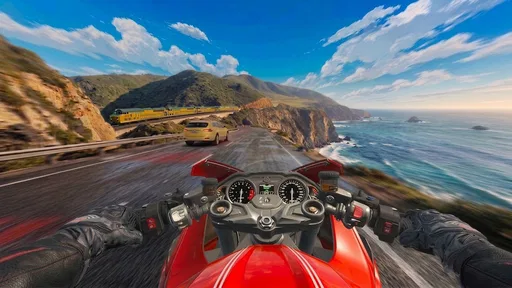
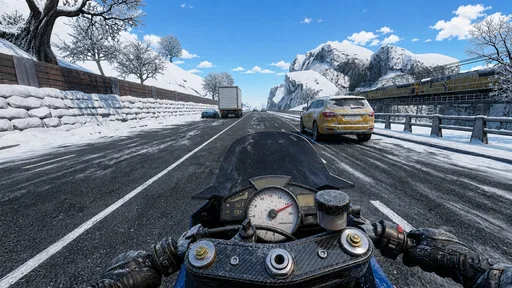
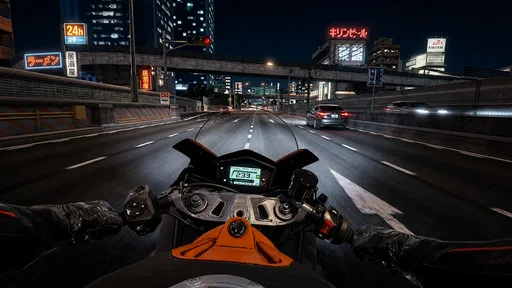
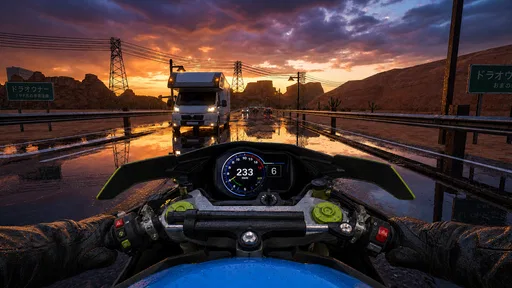
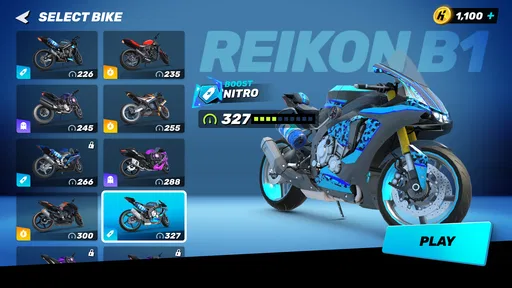
Our Review of Highway Moto Rush: Traffic
 Analysis by Appyee
Highway Moto Rush: Traffic is the kind of racing game I open when I want a quick burst of speed rather than a long, carefully planned championship. It puts the focus on motorcycles, moving traffic, and the small decisions that separate a clean run from a spectacular crash. After spending time with it, I found the appeal easy to understand: the controls are built around immediate reactions, while the road keeps asking me whether I should take a safer line or squeeze through a tighter gap.
That simple idea gives the game a different mood from track racers. I am not mainly thinking about braking for a marked corner or learning a fixed circuit. I am watching the vehicles ahead, judging their movement, and trying to keep enough space to react. It feels closer to a concentration challenge wrapped in a motorcycle game. The presentation aims for a realistic racing-simulator feel, but the most important skill is still timing.
The game is free to start and is suitable for Everyone, which makes it approachable for casual players and younger users. It comes from AxesInMotion Racing, a developer with a clear interest in driving games. The current version is 1.4.1, and the game has already passed over one hundred thousand installs. Its average rating sits at 4.4 from more than four hundred ratings, although only a couple of written reviews are visible, so I would treat the score as a useful signal rather than a complete picture of long-term satisfaction.
How the current ride feels
The first thing I noticed is how quickly the game gets to its central loop. There is no need to learn a complicated racing rulebook before enjoying it. I ride forward, read the traffic, and make rapid adjustments. That makes it a good fit for short sessions: a few minutes while waiting for a bus, taking a break, or winding down before bed. The game does not require the kind of uninterrupted attention that a full simulation demands, but it does punish careless movements.
Traffic changes the character of every attempt. An empty road would turn the experience into a basic speed test, while the vehicles create the tension. I have to decide whether a gap is genuinely open or only appears open for a moment. That is where the game becomes more interesting than its straightforward premise suggests. A fast line is not always the best line, and a slightly slower approach can preserve a run that would otherwise end immediately.
I also like that the motorcycle is the center of the experience rather than just a decoration attached to a standard car-racing formula. The narrower vehicle creates opportunities that would not feel natural in a conventional car racer, but those opportunities come with a cost. I can attempt a pass through a small opening, yet the margin for error is equally small. The result is a steady push and pull between confidence and restraint.
For someone coming from arcade racers, the adjustment is fairly mild. The game is easier to understand than a deep motorcycle simulator because the main challenge is traffic awareness, not mastering a large collection of technical controls. For someone expecting a console-style simulation with detailed tuning and strict track behavior, the experience may feel lighter. I see it as an accessible traffic racer with realistic intentions, not as a replacement for a full motorsport simulation.
Controls that reward anticipation
The most useful habit I developed was looking beyond the nearest vehicle. If I focused only on the object directly in front of me, I often reacted too late to the next obstruction. Watching two or three vehicles ahead gave me time to choose a side before the immediate gap disappeared. That small change in attention made the game feel less random and more skill-based.
I recommend making gentle movements whenever the road is busy. Large last-second corrections are tempting, especially when a gap closes, but they usually create a second problem somewhere else. A controlled adjustment keeps the motorcycle predictable and leaves more room for the next decision. This is one of the game’s less obvious lessons: surviving longer is often about reducing unnecessary steering rather than constantly searching for the most dramatic overtake.
Another practical tip is to treat speed as a resource instead of an automatic goal. The store description emphasizes riding fast, and speed is certainly part of the appeal, but maximum pace is not always the smartest choice during dense traffic. A short reduction in risk can be more valuable than an aggressive pass that ends the run. Players who approach every section as a sprint may find the game frustrating; players who alternate between pressure and patience will usually get more from it.
What version 1.4.1 means for players
Version 1.4.1 is the current point of the game’s development, so this is the build I would judge when deciding whether to install it. The version number suggests an experience that has moved beyond its earliest release stage, but I would not read that as a promise of a major transformation. The important question for a new player is whether the central traffic-riding loop already sounds enjoyable, because that is the part that determines the game’s value from the first session.
For existing players, a current version can be reassuring because it shows that the title has continued along its development path rather than remaining frozen at launch. At the same time, a version label alone does not tell me how much the moment-to-moment racing has changed. I would keep expectations practical: update to the newest build for the current experience, but do not install it expecting a completely different genre or a full redesign.
The release date is June 12, 2026, which places the game in a relatively early stage of its wider life. That matters when considering the size of the community and the amount of long-term refinement still possible. I would be comfortable trying it now, especially because the entry cost is free, but I would also evaluate it as a developing casual racer rather than a finished, feature-heavy flagship.
The purchase range runs from $0.99 to $94.99 per item. That is the detail I would pay closest attention to before spending. The free starting point makes experimentation easy, but optional purchases can change how comfortable the experience feels for different players. I prefer to play the opening sessions without buying anything, learn whether the traffic challenge holds my attention, and only then decide if an optional item genuinely improves my enjoyment rather than simply shortening the path through the game.
Who benefits most from the design
This is a strong match for players who enjoy reflex games with a clear objective and little preparation. If you like the feeling of threading through traffic, improving your awareness, and trying to beat your own best effort, the game has a sensible foundation. It also suits people who want motorcycle action without committing to a long career mode or a technically demanding simulation.
A realistic everyday use case would be a short evening session after work. I might play several attempts, notice that I am making the same mistake when traffic compresses, and spend the next run deliberately choosing earlier lanes. That kind of session feels productive even when I do not achieve a spectacular result, because the improvement comes from reading the road better rather than simply hoping for luck.
It is less suitable for someone searching for deep customization, structured competition, or a large narrative layer. Players who prefer fixed circuits and repeatable lap strategy may be happier with a traditional track racer. Those who want a calm, almost meditative driving game should also think twice: traffic creates pressure, and the attraction depends on reacting to danger. The game’s strengths are tied directly to the same tension that may turn away a more relaxed audience.
Where it differs from familiar racing alternatives
Compared with a standard arcade racer, Highway Moto Rush: Traffic places more attention on the road between destinations than on cornering technique. There is no need to memorize a circuit in the same way. Instead, I am constantly interpreting a changing arrangement of vehicles. That makes each attempt feel more immediate, but it can also make progress feel less predictable than in a lap-based game.
Compared with a serious motorcycle simulator, it is easier to approach and faster to understand. I do not need to learn racing theory before I can enjoy a run. The trade-off is depth. A specialist simulation will usually appeal more to players who want detailed machine behavior, careful setup, and a long-term mastery curve. This game is better for the person who wants the sensation of motorcycle risk without turning every session into a technical exercise.
It also differs from endless runners because the traffic is not merely a backdrop for collecting objects or following a fixed sequence of obstacles. The vehicles are the main source of decision-making. I am choosing when to pass and when to hold position, which gives the game a more deliberate rhythm than a simple reaction test. That distinction is important when deciding what to download: the fun comes from road judgment, not just from keeping a character moving.
Small strategies that make the game fairer
My first recommendation is to build a safe rhythm before chasing risky overtakes. Early in a session, I try to learn how quickly traffic closes and how much room a motorcycle really needs. Once that rhythm feels familiar, I can take more ambitious lines with a better sense of the consequences. This approach is more reliable than starting aggressively and trying to understand the controls after a mistake.
Second, I would avoid treating every opening as an invitation. Some gaps are useful because they lead to a clear view of the next section; others only move the problem closer. The best pass is often the one that leaves me aligned with more space afterward. Thinking one decision ahead turns the game from a series of desperate escapes into a chain of manageable choices.
Third, when a run ends, I would identify the type of error rather than simply blaming the traffic. Did I enter too quickly, change direction too late, or focus on the nearest vehicle? Each answer suggests a different adjustment. This makes the game more rewarding for players who enjoy incremental improvement, and it prevents repeated attempts from becoming empty restarts.
These strategies also reveal a limitation. The game’s enjoyment depends heavily on the player creating personal goals. If I only measure success by an immediate win or a dramatic run, the loop can feel narrow. If I set a smaller target, such as surviving longer in heavy traffic or making cleaner passes, the same content has more staying power. That is a genuine trade-off: the game offers an accessible challenge, but I may need to supply some of the long-term structure myself.
Practical considerations before installing
The minimum operating-system requirement is Android 7.1, so the game is not restricted to only the newest phones. That makes it easier for owners of older compatible devices to try it. I would still judge the experience on the particular phone or tablet in use, especially if smooth reactions matter to you. In a traffic racer, even a small amount of hesitation can affect a decision, so comfortable play is more important than simply being able to launch the game.
The Everyone content rating also makes it a straightforward choice for households looking for a racing game without an older-audience label. That does not mean every player will enjoy the pressure of near misses, but it does make the basic audience broad. I would still explain the optional purchase range to younger players and decide in advance whether spending is allowed, since the free download and the available items are separate parts of the experience.
Because the game is free, the sensible workflow is to install it, play several short sessions, and judge three things: whether the traffic feels readable, whether the controls feel comfortable on your device, and whether you still want another attempt after a failed run. Those answers matter more than the rating alone. A 4.4 average is encouraging, but a player who dislikes repeated near-miss pressure will not suddenly enjoy the game because other users rated it well.
What I would like to see next
The most valuable future improvements would be the ones that deepen the existing traffic challenge without burying it under complexity. Clearer ways to understand personal progress, more reasons to refine passing technique, or additional variety in how road situations develop would all support the current concept. I am deliberately separating those wishes from the present game: they are ideas for what could make the experience stronger, not claims about features already included.
I would also watch how AxesInMotion Racing handles the balance between free play and purchases as the title evolves. The broad purchase range means the game needs to remain comfortable for people who only want the free experience. If the core riding remains satisfying without spending, the low entry barrier will stay one of its best qualities. If progress starts to feel overly tied to purchases, that advantage would become less convincing.
For current users, the main thing to watch is whether new versions improve variety while preserving the readable, reaction-focused road flow. A change that adds noise without improving decisions would not help. The game works best when I can understand why a run succeeded or failed. That clarity is more important than simply adding more visual activity.
My final recommendation
After reviewing it as it stands in version 1.4.1, I see Highway Moto Rush: Traffic as a focused, approachable motorcycle racer built around traffic awareness. I recommend it to anyone who likes quick sessions, close passes, and the satisfaction of turning a risky road into a controlled sequence of choices. Its free entry makes trying it easy, and its Everyone rating keeps the audience broad.
I would skip it if you need deep bike tuning, a substantial career structure, or the precision of a dedicated simulation. I would also be cautious about spending until the basic loop proves that it has staying power for you. The best reason to install it is not the promise of endless speed; it is the feeling of learning to read moving traffic before the road forces a decision.
That focus gives the game a clear identity. It is not trying to be every kind of racing game at once, and I think that helps. The experience remains relatively narrow, but within that lane it offers a satisfying test of anticipation, restraint, and nerve. For a free motorcycle game that can fit into a short break, that is a worthwhile combination.
Verdict
Strengths of Highway Moto Rush: Traffic
- Responsive controls make lane changes and overtakes feel smooth.
- Short races are convenient for quick gaming sessions.
- Traffic patterns keep each run unpredictable and engaging.
- Motorcycle upgrades provide a clear sense of progression.
- Bright visuals make vehicles and road hazards easy to spot.
Limitations of Highway Moto Rush: Traffic
- Frequent near misses can feel difficult for less experienced players.
- Progress may slow down when upgrade costs increase.
- Limited track variety can make longer sessions feel repetitive.
- Fast gameplay may be uncomfortable for players sensitive to motion.
- Some features may depend on watching ads or making in-app purchases.
Other Releases by AxesInMotion Racing
View All
Extreme Car Driving Simulator
Racing4.3

Extreme Car Driving Legends
Racing4.7
Similar Picks in This Category
View All
Hill Climb Racing
Fingersoft4.3

Dr. Driving
SUD Inc.4.2

Traffic Rider
skgames4.5

Asphalt 8 - Car Racing Game
Gameloft SE4.6

Race Master 3D: Car Racing
Beresnev Games4.6
Extreme Car Driving Simulator
AxesInMotion Racing4.3
Frequently Asked Questions
What is Highway Moto Rush: Traffic?
Highway Moto Rush: Traffic is an arcade-style motorcycle racing game focused on weaving through busy roads at high speed. Players ride through traffic, overtake vehicles, collect rewards, and try to achieve the highest possible score. Its gameplay is designed for short, fast sessions, making it suitable for players who enjoy simple controls, constant movement, and progressively challenging traffic situations.
How do you play Highway Moto Rush: Traffic?
The main objective is to control your motorcycle while avoiding cars, trucks, and other obstacles on the highway. Depending on the device version, movement is generally handled through touch or tilt controls, allowing you to change lanes and maintain a safe path. Successful overtakes and longer rides usually help increase your score, while collisions can end the current run.
Is Highway Moto Rush: Traffic free to download and play?
Highway Moto Rush: Traffic can generally be downloaded without an upfront purchase, although availability and pricing may vary between the Android and iOS stores. Like many free mobile games, it may include advertising, optional in-app purchases, or upgrade systems. Before downloading, check the store listing for the current monetization details, required permissions, and any device-specific limitations.
Can Highway Moto Rush: Traffic be played offline?
The core driving experience may be playable without a continuous internet connection, which is convenient for quick sessions while traveling or when mobile data is unavailable. However, certain features can require internet access, including advertisements, purchases, leaderboards, updates, or online rewards. It is best to launch the game once while connected and verify which functions remain available offline on your device.
Is Highway Moto Rush: Traffic suitable for all ages?
Highway Moto Rush: Traffic is generally easy to understand because its gameplay centers on steering, avoiding traffic, and improving scores. It may appeal to children, teenagers, and adults who enjoy casual racing games, but parents should review the store rating, advertising, and optional purchases before allowing younger players to use it. The game also requires concentration because traffic becomes faster and more difficult to avoid.
Play our best games!


